Logo
Smart Link Box

Smart Link Box

Smart Link Box – Intelligent Monitoring for HV Cable Systems

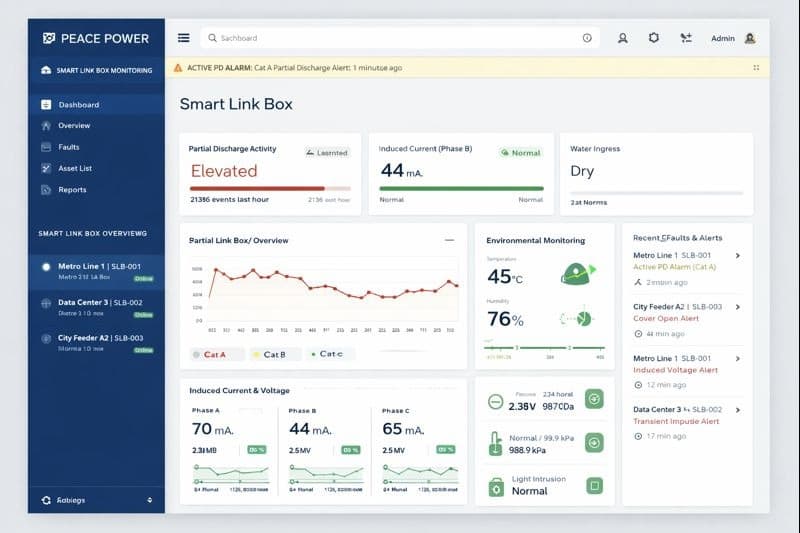
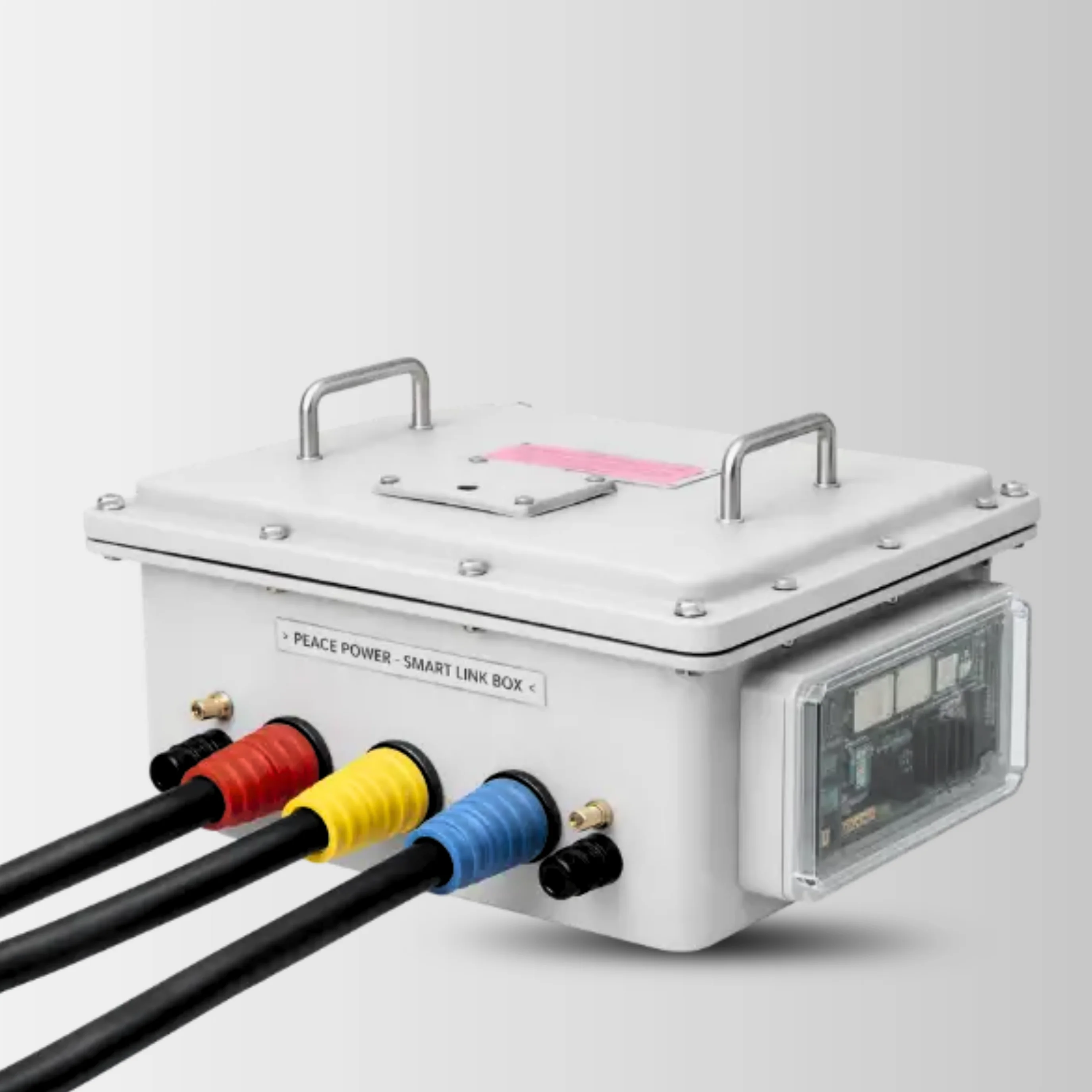
A Smart (Intelligent) Link Box is an advanced version of the traditional link box, designed to collect real-time intelligence on both link box performance and Partial Discharge (PD) activity in the XLPE insulation of High Voltage underground cable systems. As an integral part of the cable's sheath bonding system, it provides an ideal location to detect early-stage insulation faults.

Mechanically and electrically connected to the cable sheath, the Smart Link Box captures high-frequency transient impulses generated during PD events. These impulses naturally couple into the sheath and bonding cables. A built-in High-Frequency Current Transformer (HFCT) detects these transient currents, enabling reliable PD monitoring without disturbing the cable system.

For field testing, the Smart Link Box provides an external interface to access PD sensors without opening or disassembling the box. All sensor data is processed by the Main Control Unit, which performs signal conditioning, converts signals into usable digital information, and transmits the data to SCADA over GSM or Fibre Optic networks. Users can configure alert thresholds, with automatic SMS/Email notifications triggered when limits are exceeded.

Along with PD detection, the Smart Link Box integrates multiple sensors to monitor overall link box health and operating conditions, enabling predictive maintenance and enhanced reliability for HV underground transmission networks.

Real-World Applications

1

Prevents Joint Failures

Most failures begin with a small temperature rise or low-level PD. The system detects these early, allowing utilities to intervene before a breakdown occurs.

2

Predictive Maintenance

Instead of periodic offline testing, operators receive continuous condition data, enabling maintenance only when necessary and minimizing planned outages.

3

Network Reliability

Since joints are the most vulnerable part of HV cable systems, real-time monitoring reduces forced outages, repair costs, and downtime.

4

Enhanced Safety

Early detection of thermal runaway or PD reduces the risk of joint box rupture, fire hazards, and unsafe conditions for maintenance staff.

5

Critical Installations

Ideal for metro lines, industrial plants, underground urban networks, renewable evacuation systems, and locations where joints are buried or inaccessible.

6

Asset Life Extension

Continuous monitoring helps operators extend asset life, increase uptime, and reduce operational risk through data-driven decision making.

Key Features

Fiber Optic Sensing

Distributed temperature measurement across the entire cable length

Proactive Fault Detection

Real-time anomaly detection and early warning systems

Cable Health Data

Continuous monitoring for underground network integrity

Why It Matters

Smart Joint Monitoring converts traditionally passive joints into intelligent, self-diagnosing components. By combining DTS and DAS on a single fiber, it provides a unified view of joint health, helping operators extend asset life, increase uptime, and reduce operational risk.

🎯 Key Benefit: Minimize downtime and extend cable lifespan through predictive maintenance enabled by real-time health monitoring.
DTS monitoring dashboard showing real-time cable metrics
DTS-Based Monitoring

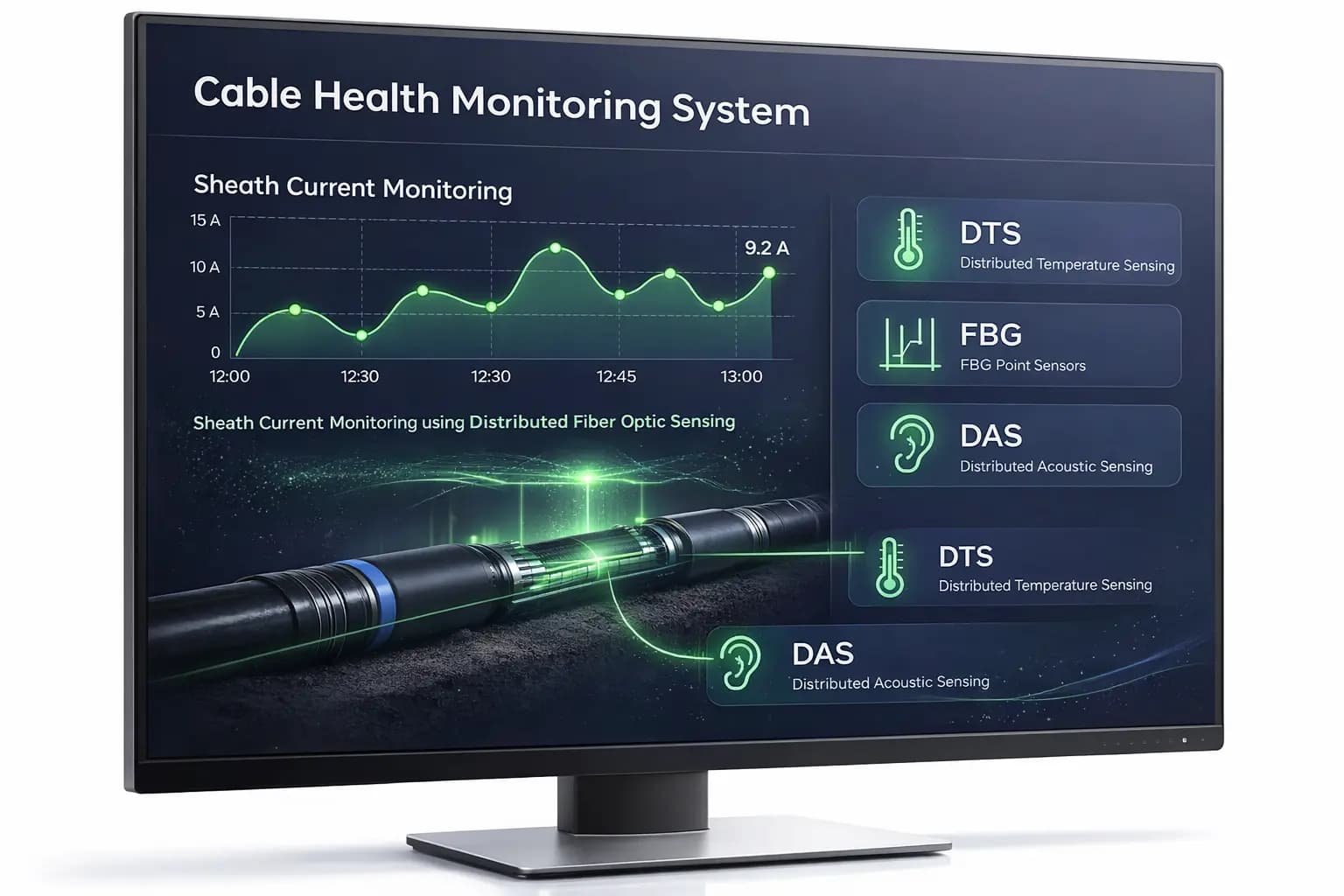
Cable Health Monitoring System

Sheath Current Monitoring using Distributed Fiber Optic Sensing

Sheath Current Monitoring using Distributed Fiber Optic Sensing is an advanced method of identifying, quantifying, and tracing the direction of sheath currents in high-voltage power cable systems. By combining the capabilities of FBG point sensors, Distributed Temperature Sensing (DTS), and Distributed Acoustic Sensing (DAS), the optical fiber becomes a continuous sensing element that captures temperature and acoustic signatures generated by sheath current movement.

How the Technology Works

As sheath currents flow along the cable route, they create characteristic thermal gradients that are detected with meter-level accuracy through DTS, while FBG sensors placed at joints, link boxes, and SVLs provide high-precision reference measurements. When these distributed and point-level temperature profiles are correlated, the system can determine not only the magnitude of the sheath current but also the direction in which it is travelling across different cross-bonded sections.

In parallel, DAS technology contributes another layer of intelligence by detecting acoustic and vibrational signals associated with sheath current surges, bonding issues, discharge activity, or mechanical disturbances, allowing the system to interpret dynamic sheath behaviour in real time.

Key Advantages

  • Entirely passive and relies solely on optical fibers
  • Electrically safe and non-intrusive
  • Ideally suited for buried, tunnel-installed, or otherwise inaccessible cable systems
  • Provides continuous visibility into sheath current evolution along the circuit
  • Monitors interactions with bonding schemes and localized thermal stress

Real-World Applications

This integrated sensing architecture enables operators to:

  • Detect overheating around joints long before it becomes critical
  • Identify malfunctioning SVLs or loose bonding connections
  • Locate unbalanced circulating currents that would otherwise go unnoticed
  • Diagnose complex cross-bonding issues with direction tracing capabilities
  • Evaluate the condition of long cable corridors
  • Ensure stable operation under dynamic load conditions

Ultimately, fiber-optic-based sheath current monitoring provides the operational intelligence needed to prevent failures, extend asset life, reduce maintenance costs, and maintain high reliability in modern HV and EHV underground transmission networks.

Key Features

Real-time Tracking

Continuous temperature and strain monitoring

Fault Detection

Pinpoint cable issues with precision

Smart Alerts

Instant notifications for anomalies

Analytics

Historical trends and predictive insights

Digital dashboard interface with real-time metrics
Cloud-Based Platform

Digital Dashboard

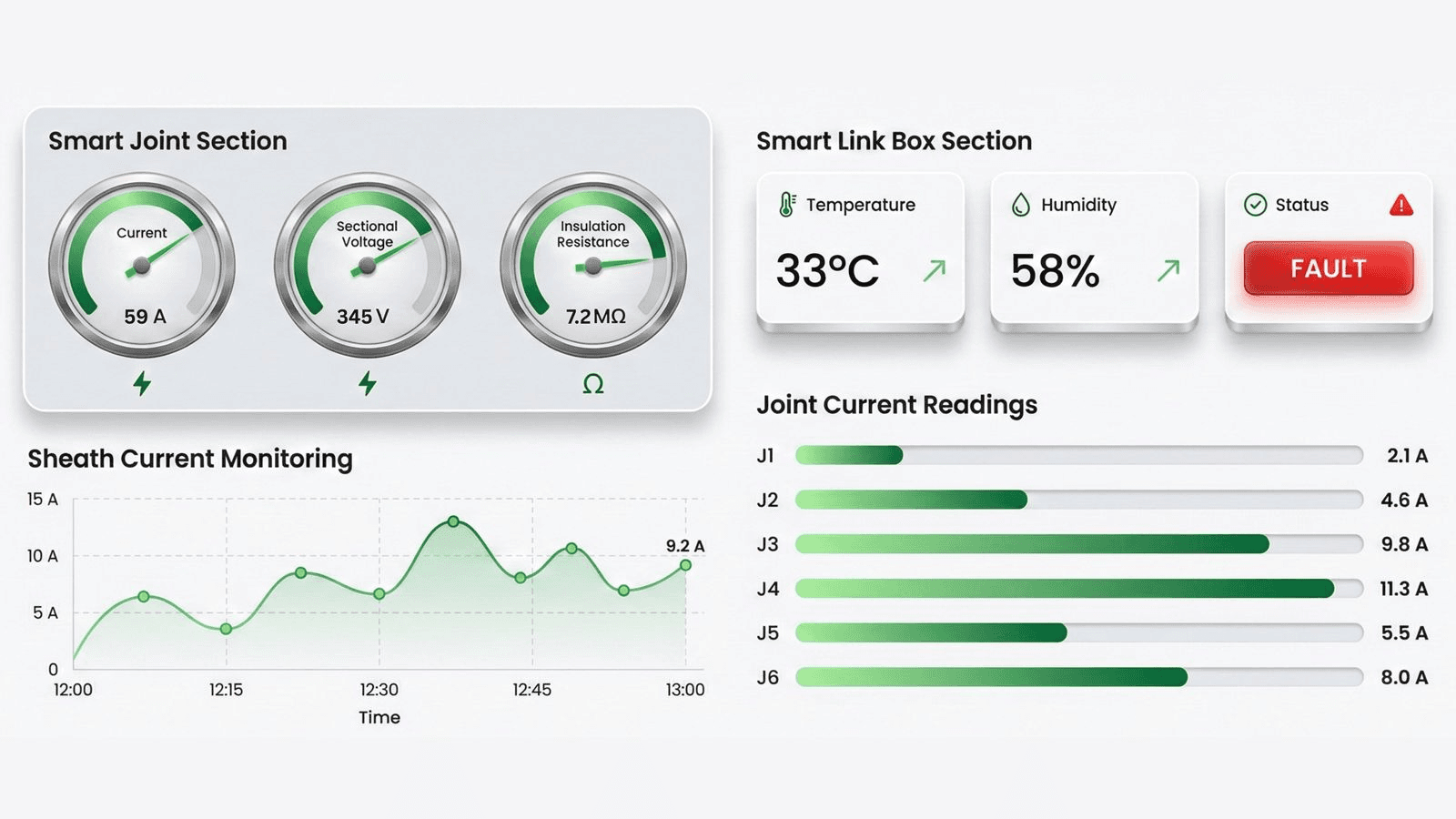
The integrated monitoring dashboard provides a unified, real-time overview of three critical subsystems: Smart Joint, Smart Link Box, and Sheath Current Monitoring. Designed for high-voltage cable networks, the dashboard consolidates electrical, thermal, and environmental data into a clean, intuitive interface that supports fast decision-making and early fault detection.

Smart Joint Monitoring

The Smart Joint section visualizes key parameters such as joint current, sectional voltage, and insulation resistance through precision analog-style gauges. This helps maintenance teams instantly identify abnormal loading patterns, insulation degradation, or thermal stress at cable joints.

Smart Link Box Module

The Smart Link Box module offers real-time insights on temperature, humidity, and enclosure health. With clear status indicators—Normal, Alarm, or Fault—it ensures immediate visibility into link box conditions, helping prevent moisture ingress, SVL malfunction, and grounding issues.

Sheath Current Monitoring

The Sheath Current Monitoring panel combines trend graphs and per-joint current distribution bars to show sheath current flow, imbalance, and directionality across cable sections. This enables early detection of circulating current issues, improper grounding, or sheath faults, significantly reducing the risk of cable overheating or premature ageing.

Overall, this dashboard acts as a centralized health monitoring view for the entire cable system, enabling predictive maintenance, reducing downtime, and strengthening operational reliability.

Dashboard Features

Real-Time Data

Live monitoring and visualization

Smart Alerts

Instant notifications for anomalies

Analytics

Comprehensive trend analysis

Historical Data

Complete audit trail and records

Operators monitoring dashboard on multiple devices

Remote Access Capabilities

Multi-Device Support

Access from desktop, tablet, and mobile devices

Cloud Infrastructure

Enterprise-grade security and reliability

Feasible Availability

Always-on monitoring and notifications

Custom Reporting

Automated reports and insights